Supplier communication
Questions to Ask a China Supplier Before You Request a Quote
Use these practical questions to clarify a China product before requesting a quote: the exact variation, materials, quantity, packaging, samples and…
Supplier communication
Use this China factory video call checklist to prepare a focused product review, record observations and turn a remote walkthrough into clear follow-up questions.
A factory video call can help a buyer ask clearer questions and see the context around a product, sample or process. It is most useful when the call has a defined purpose, the product reference is visible and every observation is recorded as something to review—not as a substitute for agreed specifications, verification or inspection.
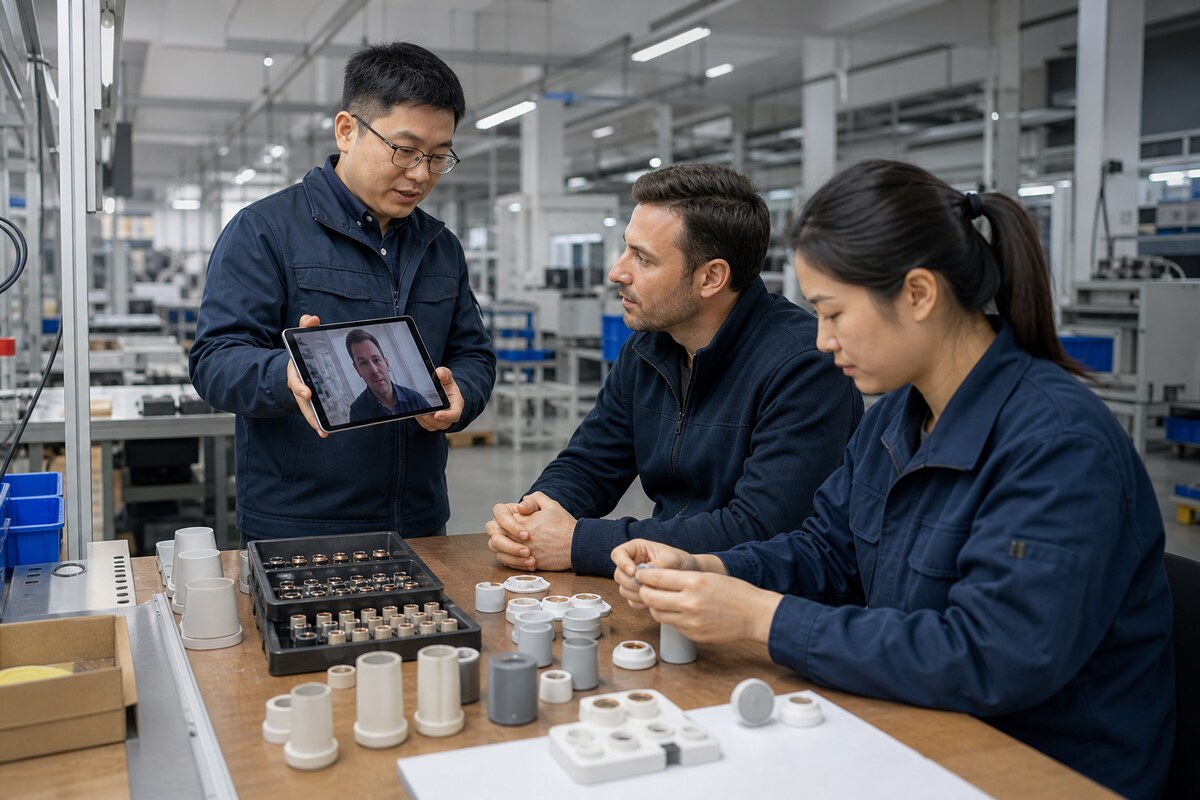
Decide what you need to review before arranging a call: an existing product, a sample revision, a particular material, a production question, packaging context or a proposed handover. Share the product link, labelled photos or sample reference in advance, so the people on the call are looking at the same item rather than a general product category.
Write a short agenda with the most important questions first. A call does not need to cover every possible topic. It should help you collect observations that inform a next decision, such as clarifying a product detail, requesting a sample photo, confirming an open question or deciding whether a separate quality or professional review is needed.
Request a clear view of the actual item or sample when one is available, including the selected size, material, color, components and included accessories. If the product is not available, record that fact and ask what reference is being shown instead. Do not silently substitute a similar-looking model for the version you intend to source.
Use the call to ask observable questions: what is this component, which variation is shown, where is the measurement taken, what is included and what differs from the linked page? A live view can make a question easier to explain, but it does not by itself establish final material, dimensions, availability, price or approval status.
For a factory walkthrough, agree a sensible sequence such as reception or production area, relevant workstation, sample or product area, packaging area and the point where goods are prepared for handover. Ask the host to identify what you are seeing. A short, focused route is often more useful than a long unscripted tour of unrelated rooms or machines.
Record the time and context of the call, but avoid turning the video into a broad claim about every product, every line or future production. What you see is a point-in-time observation. Keep it connected to the product reference and the question it was intended to help answer.
You may observe people assembling parts, checking appearance, storing materials or packing cartons. Note what was shown and what remains unknown. For example, “the host showed a visual check at one workstation” is more accurate than concluding that a complete inspection system or a future order outcome has been verified.
Use neutral language in your notes. A tidy area, a visible machine or an answer during a call can prompt a follow-up question, but it does not guarantee capacity, quality, legal compliance, delivery timing or supplier performance. Separate a direct observation from an interpretation and from an agreed action.
After the call, organise the agreed screenshots, product photos, measurements, sample references and follow-up messages with the item name and date. Ask for missing information in writing, especially where a product variation, material, packaging detail or quantity assumption needs confirmation. Keep personal contact details and unrelated material out of the project record.
Turn observations into a short list of actions with an owner and a due point: provide a close-up, identify a component, share the active sample reference, clarify packaging, review a quantity split or decide whether a sample or inspection step is appropriate. This prevents a useful conversation from becoming an untraceable memory.
At the end of the call, restate what was confirmed, what was observed and what still needs review. Update the sourcing brief with the active product reference, selected variation, notes, quantity direction, destination and any sample or packaging context. If the information changed, give the brief a new version date rather than editing an older instruction without a record.
For several product pages, the desktop Chrome helper saves only the active page after you choose it and lets you edit each item before submission. China Sourcing Team supports product projects from US$1,000, subject to scope review. A video call, saved page or sourcing request is not a final supplier assessment, inspection result, quote or purchase order.
Use the China sourcing request form for one item, review the completed sourcing brief example, or read about the guided Chrome helper for a multi-product project. Sourcing support starts from US$1,000 and is subject to scope review.